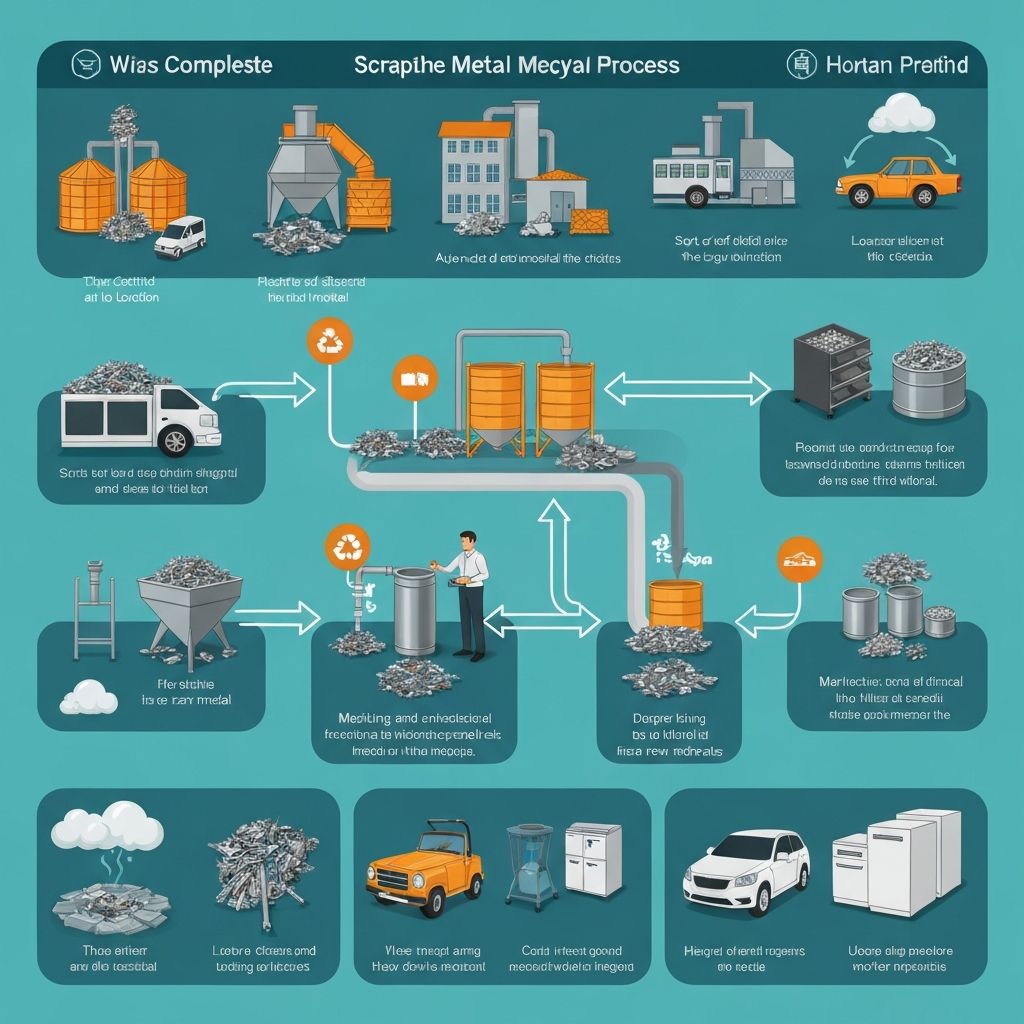
The metal recycling process transforms old metals into valuable resources. Let's explore each stage.
## 10 Stages of Metal Recycling
### 1. Collection We collect scrap metal from various sources - construction sites, demolition projects, old appliances, and vehicles.
### 2. Sorting and Separation Metals are sorted by type. Ferrous metals are separated from non-ferrous metals.
### 3. Shredding and Crushing Large metal items are shredded into smaller, uniform pieces for more efficient processing.
### 4. Magnetic Separation Electromagnets separate ferrous metals from non-ferrous metals.
### 5. Cleaning and Decontamination Metals are cleaned to remove oil, paint, and other contaminants.
### 6. Melting Sorted metals are melted in furnaces at appropriate temperatures.
### 7. Purification Molten metal is refined to remove impurities.
### 8. Casting and Cooling Purified metal is poured into molds, forming ingots and sheets.
### 9. Quality Control Products are tested to ensure they meet industry standards.
### 10. Packaging and Distribution Finished products are packaged and shipped to manufacturers.
## The Circular Advantage
Metals can be recycled indefinitely without losing properties. This saves significant energy compared to mining and processing virgin ore.